
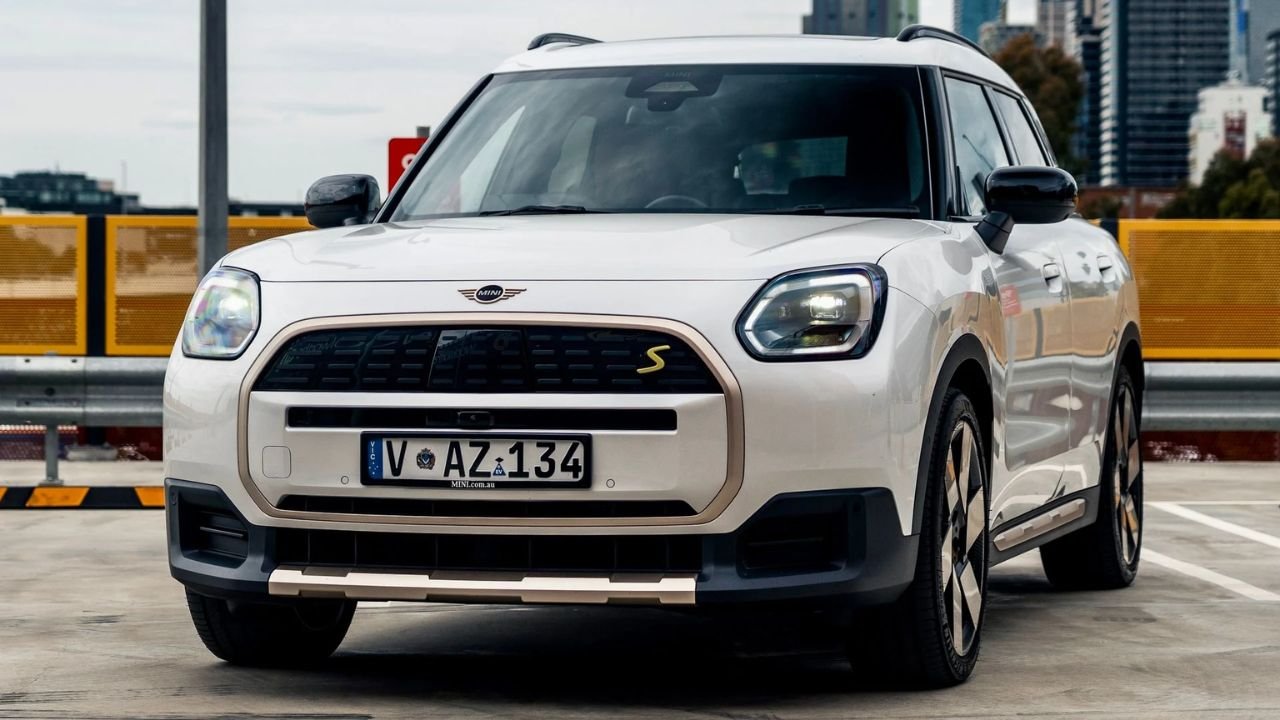
The 2026 Mini Countryman Electric marks a major change for a model once known primarily for its compact dimensions. The latest Countryman has grown into a genuinely practical electric SUV while retaining the distinctive styling, playful character and upscale feel that separate Mini from more conventional rivals.
Built on a platform shared with the BMW iX1, the electric Countryman combines everyday usability with strong performance. The flagship SE ALL4 is particularly impressive, offering dual-motor all-wheel drive, quick acceleration and a claimed driving range that makes it suitable for more than short urban trips.
The transformation does come with compromises. The Countryman is now considerably larger and heavier than earlier generations, while its technology-heavy cabin can take some getting used to. Its premium positioning also means buyers pay more for the Mini experience.
More Mini
The third-generation Countryman is around 13cm longer and 6cm taller than its predecessor. That additional size is immediately noticeable inside, where rear passengers benefit from improved space and the luggage compartment offers useful room for everyday family duties.
The larger body has also changed the Countryman’s character. This is no longer simply a small crossover with Mini styling. It feels much closer to a conventional premium SUV, although the designers have worked hard to preserve the brand’s distinctive visual identity.
At the same time, the electric model weighs about 2,000kg, making it the heaviest Countryman yet. Despite that mass, its steering remains direct and responsive.
Strong Performance
The range-topping SE ALL4 uses two electric motors and produces 230kW and 494Nm. That is enough to propel the SUV from 0 to 100km/h in approximately 5.6 seconds.
The instant response of the electric motors makes the Countryman particularly entertaining in city traffic. Acceleration is immediate, while the all-wheel-drive system provides additional traction when conditions become difficult.
Its substantial weight is more apparent when driving aggressively through corners, but this isn’t a vehicle that feels cumbersome. Instead, it delivers a composed and controlled experience.
Smooth Ride
Ride comfort is one of the Countryman’s strongest qualities. The suspension keeps the vehicle stable at higher speeds and the electric drivetrain makes the cabin impressively quiet.
Sharper potholes and rougher road surfaces can expose a firmer side to the suspension, particularly with larger wheels. Nevertheless, the overall balance works well for an SUV designed primarily for daily driving.
Another highlight is the braking system. The transition between regenerative braking and conventional friction brakes feels natural, avoiding the inconsistent pedal response sometimes found in electric vehicles.
Useful Range
The SE ALL4 is equipped with a 66.5kWh lithium-ion battery. Its claimed WLTP range reaches approximately 467km, although real-world distance will vary with temperature, speed, driving style and use of heating or air conditioning.
Mini has also introduced a silicon-carbide inverter designed to improve efficiency. That helps the Countryman make better use of its battery rather than relying solely on additional capacity.
For many owners, the combination should be sufficient for normal commuting and weekend journeys without making charging a constant concern.
Quick Charging
The Countryman Electric supports up to 130kW DC fast charging. Under suitable conditions, charging from 10% to 80% can take less than half an hour.
That makes longer journeys considerably easier, especially when a short stop can add a substantial amount of usable range.
Home charging is also well supported, with 22kW AC charging capability where the necessary electrical installation is available. For owners who can charge overnight, regular daily driving becomes considerably simpler.
Tech-Filled Cabin
Inside, the Countryman takes Mini’s minimalist approach to an extreme.
The centerpiece is a 9.4-inch circular OLED display mounted prominently in the dashboard. Navigation, entertainment and many vehicle functions are accessed through this screen, while wireless Apple CarPlay and Android Auto provide familiar smartphone integration.
The design looks modern and unmistakably Mini, but there is a learning curve. Many conventional physical controls have disappeared, meaning some basic functions require interaction with the touchscreen.
There is also no conventional instrument cluster directly behind the steering wheel. Buyers who want a more traditional driving interface need to select the optional head-up display.
Room for Life
The larger exterior dimensions pay dividends when carrying passengers and luggage.
The boot provides approximately 460 litres of capacity, expanding to around 1,450 litres with the rear seats folded.
The 40/20/40 split-folding rear arrangement adds flexibility for transporting longer objects while still carrying passengers. However, the electric Countryman loses the sliding rear-seat arrangement available in some combustion-powered versions because of the way its battery is packaged.
The interior also takes a different approach to materials. Textiles and knitted surfaces replace much of the traditional leather-focused luxury treatment, giving the cabin a distinctive environmental and fashion-conscious character.
Where It Fits
The Countryman Electric occupies an interesting position in the growing premium electric SUV market.
The Volvo EX30, Kia EV3 and Audi Q4 e-tron are among its key alternatives, while vehicles such as the Tesla Model Y and Hyundai Ioniq 5 appeal to buyers prioritizing space or charging performance.
The Mini’s advantage is less about outright practicality and more about personality. It combines recognizable styling with an upscale interior, lively driving manners and a strong sense of occasion.
Final Verdict
The 2026 Mini Countryman Electric is a much more serious electric SUV than its predecessors. Its larger dimensions bring genuine practicality, while the SE ALL4 provides performance that would have seemed extraordinary for a Mini crossover only a few years ago.
The 467km WLTP range and rapid DC charging make it a credible everyday EV, while the quiet cabin and refined ride suit longer journeys.
Its biggest weaknesses are equally clear: considerable weight, a premium price and an interface that relies heavily on the central touchscreen.
