
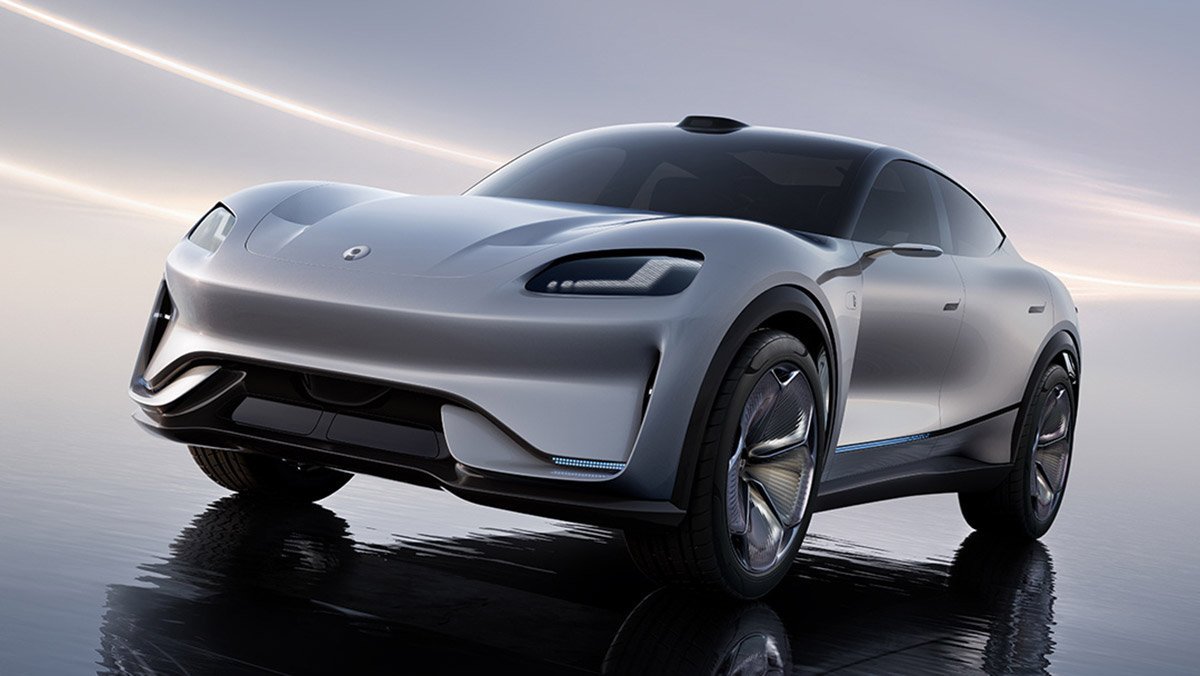
Aiva, the electric vehicle brand backed by Seres through its Saidou Technology venture, is reportedly considering a partnership with CATL that could give its upcoming vehicles access to a growing battery-swapping network in China.
The potential cooperation is significant because Aiva is preparing to enter the mainstream electric vehicle market with its first production model, the ME7. Rather than building a battery-swapping network from scratch, the young brand could use CATL’s existing infrastructure to reduce costs and reach customers more quickly.
The discussions are reportedly still at an early stage, with the final cooperation model and battery specifications yet to be determined.
Aiva’s Big Move
According to a LatePost report cited in the supplied information, Aiva is discussing battery-swap cooperation with CATL.
The two companies have not publicly disclosed a finalized agreement, meaning important details remain open. These include the battery format that the ME7 could use, how battery leasing would work and when the partnership might become operational.
For Aiva, however, the possibility comes at an important point in its development.
The company plans to debut the Aiva ME7 by the end of 2026, with pre-orders expected to start in early 2027. The vehicle is intended for both the Chinese market and selected overseas markets.
Meet the ME7
The ME7 will be Aiva’s first production vehicle as the newly established brand begins building its presence in China’s competitive electric-car market.
Aiva was unveiled in June 2026 by Saidou Technology, which was previously known as Landian Technology and operated as a Seres subsidiary.
The brand plans to focus primarily on mainstream vehicles priced above 200,000 yuan, putting it in a segment where customers increasingly expect fast charging, long driving ranges and convenient energy replenishment.
Battery swapping could become one of Aiva’s differentiators.
Lower Upfront Cost
A battery-swapping strategy can change the economics of an electric vehicle.
Instead of requiring buyers to purchase the vehicle and battery as one package, a manufacturer can potentially separate battery ownership from the vehicle itself. Customers could lease the battery while paying a lower initial vehicle price.
That approach could make Aiva’s products more accessible without forcing the company to move its vehicles into a cheaper market segment.
It could also give the brand greater flexibility in pricing and battery services as it expands.
CATL’s Network
CATL has been aggressively developing its Choco battery-swapping ecosystem.
According to figures cited in the supplied information, the battery giant had built 2,000 Choco swap stations in China by June 30, covering 31 provinces and 180 cities.
CATL has set a target of more than 3,000 swap stations by the end of 2026.
For a young automaker, access to that network could be considerably more attractive than investing billions of yuan in an independent infrastructure rollout.
The model also gives Aiva the possibility of entering additional cities without waiting for its own stations to be constructed.
Standard Batteries
Interoperability is central to CATL’s battery-swapping strategy.
The company initially introduced standardized battery packs known as the 20# and 25# formats for different passenger-vehicle categories.
In April 2026, CATL added the larger 26# battery. Its initial version has a 75-kWh capacity and uses an 800-volt electrical architecture, targeting vehicles in the B- to C-segment range.
For Aiva, compatibility with one of CATL’s standardized formats could be crucial. A standardized battery can potentially allow vehicles from different brands to share infrastructure, improving station utilization and making the network more economically viable.
Strong Corporate Links
The proposed cooperation is supported by an unusual ownership relationship.
Saidou Technology completed a capital increase and ownership restructuring earlier in 2026. Chongqing state-owned capital-backed Shaci Zhiyuan is its largest shareholder, holding approximately 34.5%.
Seres holds about 32.96%, making it the second-largest shareholder, while CATL owns approximately 9.89% through an investment platform.
Those existing ties could make technical cooperation easier to establish.
Seres is expected to support Aiva with vehicle manufacturing, engineering, supply-chain operations and quality control. The ME7 is also expected to be manufactured at Seres’ Phoenix plant.
CATL, meanwhile, can contribute battery technology and expertise in charging and swapping systems.
Beyond One Brand
CATL’s battery-swap ambitions extend well beyond Aiva.
The company has announced plans for a shared high-speed charging and battery-swapping ecosystem involving Seres, Changan Automobile, Chery, GAC Group, SAIC-GM-Wuling and BAIC.
Other automakers have already begun adopting CATL’s swapping technology. GAC Aion, Changan and Arcfox are among brands that have launched vehicles compatible with CATL’s battery-swap approach.
That growing participation could help establish battery swapping as a broader industry standard rather than a service limited to one manufacturer’s vehicles.
A Different EV Strategy
China’s electric vehicle market is dominated by improvements in fast charging, but battery swapping offers a different solution to the problem of charging time.
A depleted battery can theoretically be replaced with a charged one within minutes, avoiding a lengthy charging stop.
For Aiva, the attraction is twofold: customers could potentially receive faster energy replenishment, while the company could avoid the enormous expense of creating an entirely independent swap network.
The challenge will be ensuring that the ME7’s battery architecture fits CATL’s standardized system without compromising vehicle performance, packaging or international-market plans.
What Comes Next
Aiva’s immediate priority is getting the ME7 ready for its planned debut by the end of 2026.
Whether CATL battery swapping becomes part of that launch strategy remains uncertain until the companies finalize their technical and commercial arrangements.
If an agreement is completed, however, Aiva would enter the market with something many new EV brands struggle to secure: access to an established energy-replenishment ecosystem from day one.
