
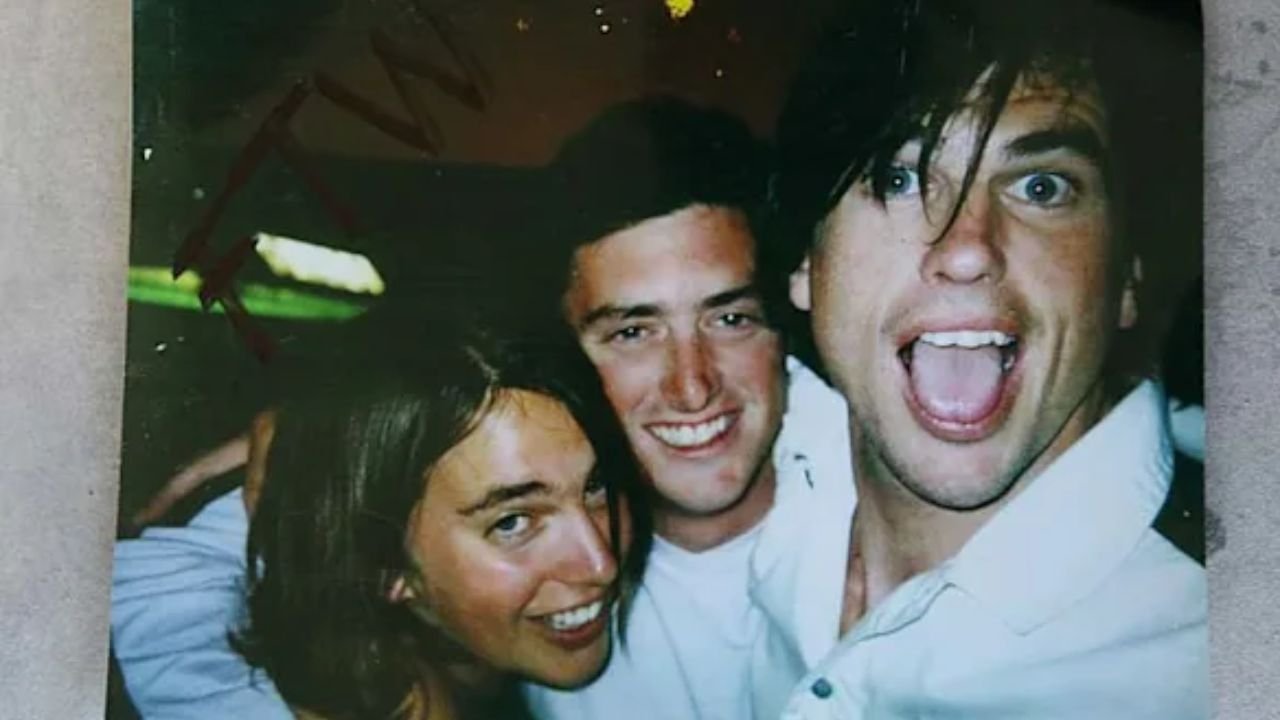
Matt Dee was known to millions as the energetic lifeguard from Bondi Rescue, but behind his television personality was a family story that profoundly shaped the direction of his life.
Dee, whose death was announced on September 2, 2026, grew up in Melbourne with his mother, older brother Jonathan and younger sister Rachel. His mother raised the three children as a single parent, and the family regularly spent holidays around Torquay, where the siblings developed their connection with surfing and the ocean.
Years later, devastating losses within the Dee family became the driving force behind Matt’s mental health advocacy.
Both Jonathan and Rachel died in 2009 after experiencing serious mental illness. Matt had also lost his grandmother when he was a teenager.
Those experiences ultimately influenced his work with Suicide Prevention Australia and the creation of FTW Revolution.
His Early Family
Matt Dee was raised in Melbourne alongside two siblings.
His older brother was Jonathan Dee, while his younger sister was Rachel Dee.
Published accounts of Matt’s childhood say their mother raised the three children as a single parent. The family’s holidays frequently took them to Torquay on Victoria’s Surf Coast, where they learned to surf.
That early connection with the ocean eventually became a defining part of Matt’s adult life.
The family later relocated to Sydney in 1990 as Jonathan and Rachel experienced increasing mental health difficulties.
Sydney ultimately became the setting for Matt’s career as a professional lifeguard.
Who Was His Mother?
Matt’s mother clearly occupied an important place in his upbringing, but surprisingly little verified information about her has been made public.
Reliable recent reports confirm that she raised Matt, Jonathan and Rachel as a single mother, but they do not provide her full name.
That distinction matters because biographies published following a celebrity death can sometimes repeat personal details without establishing where they originated.
One older profile of Matt did reveal something memorable about his mother’s personality.
He recalled her using “FTW” as a family catchphrase when life became difficult. Those initials would later take on a completely different meaning when Matt created a movement centered on resilience and mental health.
His Brother Jonathan
Jonathan was Matt’s older brother.
He lived with bipolar disorder and experienced significant mental health difficulties.
Jonathan died at the age of 34 in 2009.
Matt subsequently spoke openly about losing his brother and the emotional impact it had on him.
In a 2011 interview, he stressed that Jonathan’s illness should not be viewed as something he had chosen. Matt wanted people to understand that his siblings had genuinely tried to manage the conditions they were living with.
Jonathan’s death was devastating for the entire Dee family.
Sadly, another tragedy followed only months later.
His Sister Rachel
Matt’s younger sister was Rachel Bridger Dee.
Rachel lived with schizophrenia for around a decade and died in December 2009 at the age of 30.
Her death came during an already painful period for the family following Jonathan’s death.
Matt later explained publicly that Rachel had been deeply affected by losing her brother while simultaneously dealing with her own mental health challenges.
The deaths of both siblings within the same year left Matt carrying considerable grief.
Instead of hiding that part of his family history, he eventually began discussing it publicly in the hope that other families would feel less ashamed or isolated when dealing with mental illness.
Losing His Grandmother
Jonathan and Rachel were not Matt’s first experiences with suicide within his family.
His grandmother had died when Matt was just 15.
Recent reports remembering Dee following his death have highlighted that earlier family tragedy alongside the later deaths of his siblings.
Experiencing such a loss during adolescence added another layer to his understanding of how suicide affects surviving relatives.
By adulthood, Matt had experienced repeated grief within his immediate family.
Those experiences would become central to the work he pursued away from television.
Life at Bondi
Matt became nationally recognizable through Bondi Rescue.
The Australian reality series follows professional lifeguards working at Sydney’s Bondi Beach, documenting everything from rescues and medical emergencies to the lighter interactions that occur around one of Australia’s busiest beaches.
Matt appeared on the program from 2008 until 2017.
His humor and larger-than-life personality made him particularly memorable.
A later compilation from the official Bondi Rescue channel celebrated his funniest moments and dubbed him the “Most Aussie Lifeguard EVER.”
Yet the entertaining personality viewers saw on television existed alongside a much more serious mission away from the cameras.
Mental Health Mission
Matt used his family’s experiences to become an outspoken mental health advocate.
He worked as an ambassador for Suicide Prevention Australia and was also associated with the Schizophrenia Research Institute.
His connection to both causes was deeply personal.
Jonathan had lived with bipolar disorder, while Rachel had experienced schizophrenia.
Matt repeatedly emphasized that people living with mental illness needed understanding rather than blame.
He also wanted families to speak more openly about mental health instead of treating it as something embarrassing that should remain hidden.
That philosophy became central to FTW Revolution.
What Was FTW?
Matt co-founded FTW Revolution as a clothing, events and outreach initiative.
The organization was designed to connect with people—particularly younger Australians—who might not feel comfortable contacting conventional mental health services.
FTW developed from a phrase that had existed within Matt’s family into a broader message about overcoming difficult circumstances.
An older profile described Matt transforming the initials into “Finding The Way.”
The organization eventually became closely connected with suicide-prevention fundraising.
According to ABC News, FTW said it raised at least $500,000 for Suicide Prevention Australia.
Matt’s family tragedies had therefore become the foundation for work intended to help other families avoid similar losses.
Matt Dee’s Death
News of Matt Dee’s death was announced by FTW Revolution on September 2, 2026.
The organization remembered its co-founder as someone who had touched many lives and carried out important work.
Tributes quickly appeared from former colleagues and people connected with Bondi Rescue.
Former lifeguard Trent Maxwell was among those publicly paying his respects.
At the time of the announcement, funeral arrangements had not been finalized.
Most importantly, Matt Dee’s cause of death has not been publicly confirmed.
Given his history of mental health advocacy and the tragedies within his family, it would be inappropriate to assume or speculate about the circumstances of his death without official confirmation.
His Family Legacy
For anyone searching for Matt Dee’s family, the most firmly documented story centers on the people who shaped both his childhood and his later advocacy.
He was one of three children raised by a single mother in Melbourne. His older brother Jonathan lived with bipolar disorder and died at 34. His younger sister Rachel lived with schizophrenia and died at 30. Matt had also experienced the loss of his grandmother when he was 15.
Those losses could easily have remained an intensely private family story.
Matt chose another path.
He used his public profile from Bondi Rescue to speak about grief, suicide prevention and the stigma surrounding serious mental illness. Through FTW Revolution and his advocacy work, he tried to reach people who might otherwise suffer silently.
That gives Matt Dee’s family story a significance beyond curiosity about a television personality’s relatives.
His mother and siblings were part of the life that existed before Bondi Rescue, while the losses his family endured ultimately helped shape what became one of Matt’s most enduring contributions: encouraging people struggling with mental health to speak, connect and seek support rather than face difficult moments alone.
